Introducing
Predictive Intelligence
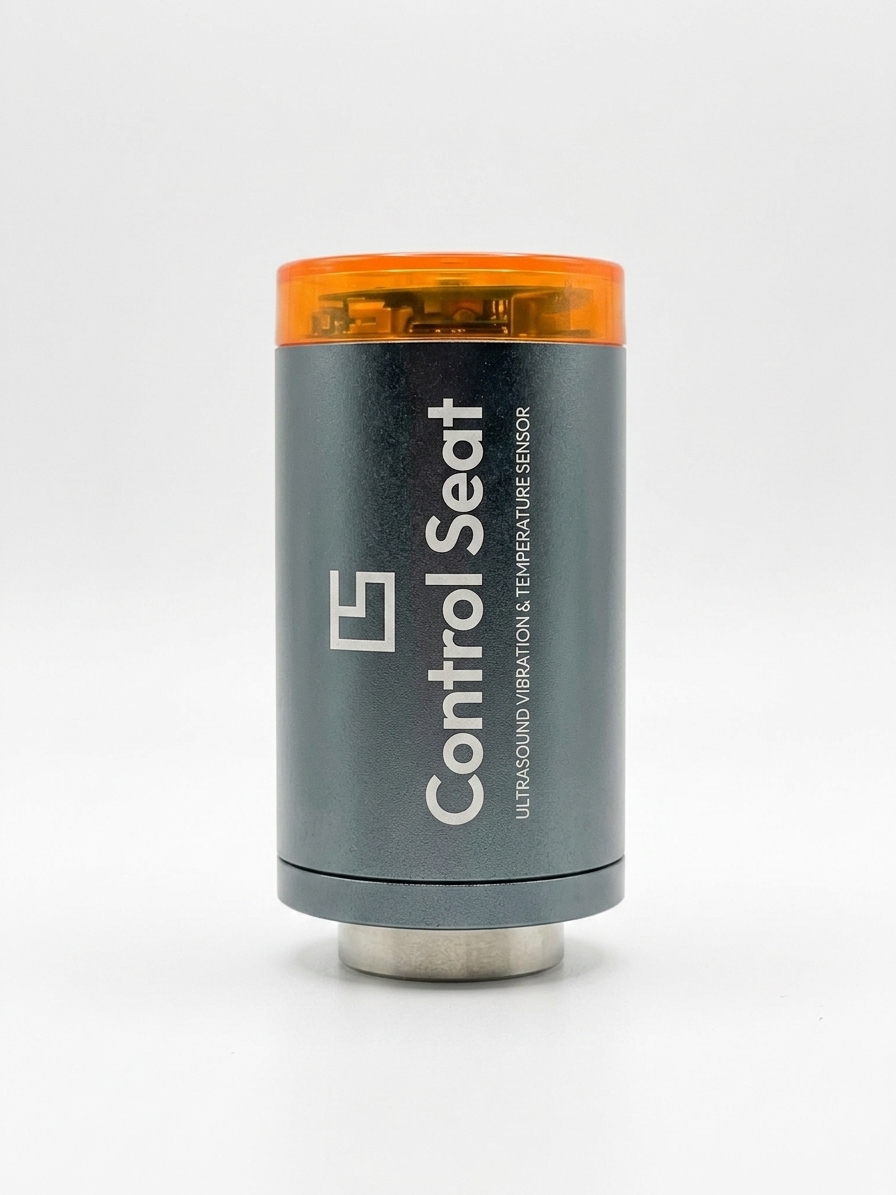
Condition monitoring is usually sold as its own system: its own sensors, its own dashboard, its own login. Before it tells you anything, you buy hardware and mount it on every machine you care about. And once it is running, it can tell you a bearing is getting worse but not that the line was running a heavier product that week, because it has never seen your process data.
That is why so many of these programs stall after the pilot. The alerts are real, but nobody can explain them fast enough to act on them.
What we launched
Control Seat now watches rotating equipment, fluid and process systems, and electrical gear for developing faults. What's different is where the data comes from.
It can start with readings you already have. Connect a historian, a SCADA system, or a PLC, and the motor current, power factor, temperature, pressure, and speed already flowing through your plant become the inputs. No hardware purchase, no install window, no mounting.
Where existing data cannot reach, wireless vibration, ultrasound, and temperature sensors fill the gap. They arrive as ordinary tags, so machine health sits right beside your process data. You can see vibration climb, and see what the machine was doing at the time.
What it catches
The sensors pick up 3-axis vibration with full spectrum detail, not just a single summary number. Ultrasound covers the range where bearing wear and lubrication problems show up first, well before anything gets loud enough for a person to notice. Temperature comes back alongside it, so you can see whether a machine is actually running hot or just noisy.
You don't need a vibration analyst
A spectrum is only useful if someone can read it, and most plants do not have an analyst on staff. Control Seat learns how each machine normally runs, then watches the frequencies where specific faults show up.
When something changes it names the fault: bearing wear, imbalance, misalignment, gear mesh, cavitation, filter loading, valve drift, or phase imbalance. It rates how urgent the fault is and carries the evidence behind it, so your team can check the work rather than take it on faith. It also sees your process data, so it can tell a machine that is genuinely degrading from one that ran a heavier product that week.
No wiring to pull
When you do add sensors, there is no conduit to run. They form their own wireless mesh and report through a gateway. Range is about 2 miles line of sight and 1,000 feet indoors, and the network grows as you add assets.
Each one runs up to five years on a battery you can swap with a spanner wrench. The housing is sealed aluminum and magnets straight onto the machine.
Get started
If you have machines with a history of surprise downtime, get in touch and we will scope what it takes to monitor them. Full specs are on the predictive intelligence page.
— Jack & Warren